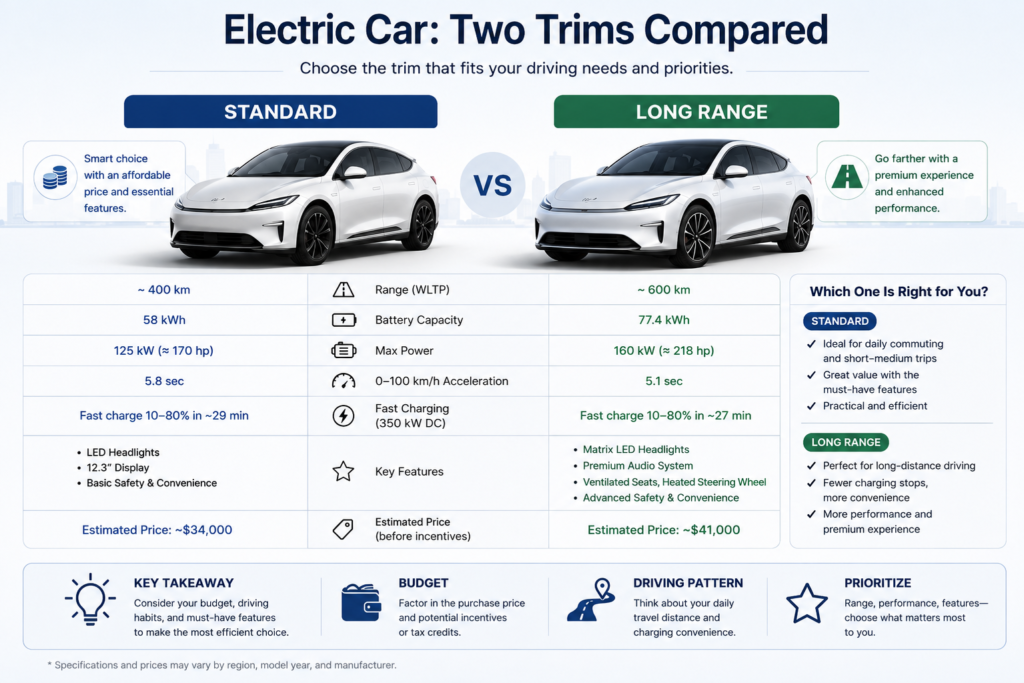
Ever walked into a dealership and noticed two trims of the same EV with a price gap of several thousand dollars — same body, same badge, wildly different sticker price? Pull up the spec sheet and you’ll usually find the answer buried in one line: battery chemistry. The cheaper trim is running on something called LFP.
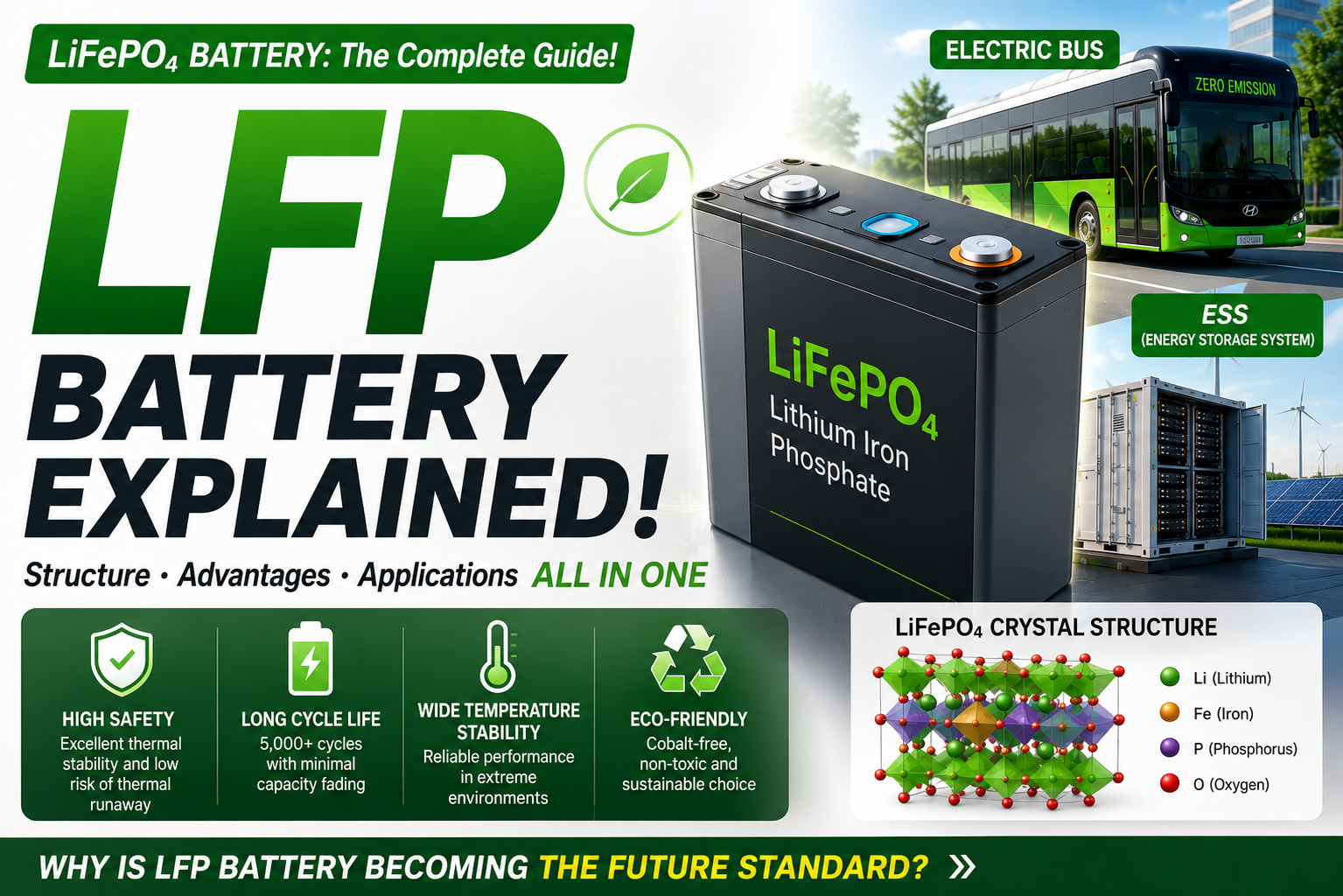
We covered NCM cathodes last time — the high-performance chemistry behind most premium, long-range EVs. Today we’re looking at its cost-conscious cousin: LFP, or lithium iron phosphate, a cathode material that skips cobalt entirely.
The Myth: “Cheaper Battery Means Worse Battery”
Here’s where most people get it wrong.
The assumption: LFP is the budget option, so it must be an inferior battery.
The reality: LFP does have lower energy density than NCM — but it actually beats NCM on safety and lifespan. Being cheaper doesn’t mean being worse; it means trading one strength for another.
LFP gives up some energy density in exchange for rock-solid safety, a much longer cycle life, and a dramatically lower price tag.
Breaking Down the Name
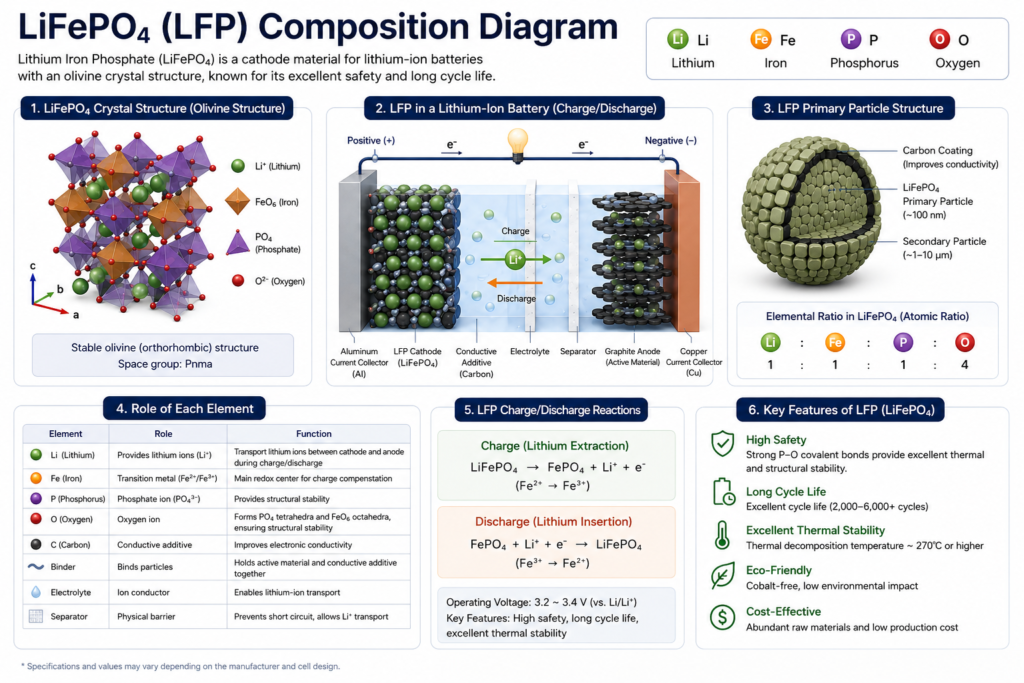
LFP stands for LiFePO4:
- Li = Lithium
- Fe = Iron (from the Latin ferrum)
- PO4 = Phosphate
The key ingredient here is iron — one of the most abundant, cheapest metals on the planet. Unlike cobalt, whose supply is heavily concentrated in the Democratic Republic of Congo, iron is mined virtually everywhere. That alone knocks a huge chunk off the cost.
There’s a structural payoff too. The bond between phosphate and iron is exceptionally strong, which means LFP cathodes resist releasing oxygen even at high temperatures — the exact chain reaction that triggers thermal runaway in NCM or LCO cells. That’s why LFP has earned a reputation as the chemistry that’s “hard to set on fire.”
LFP vs. NCM vs. LCO: Side-by-Side
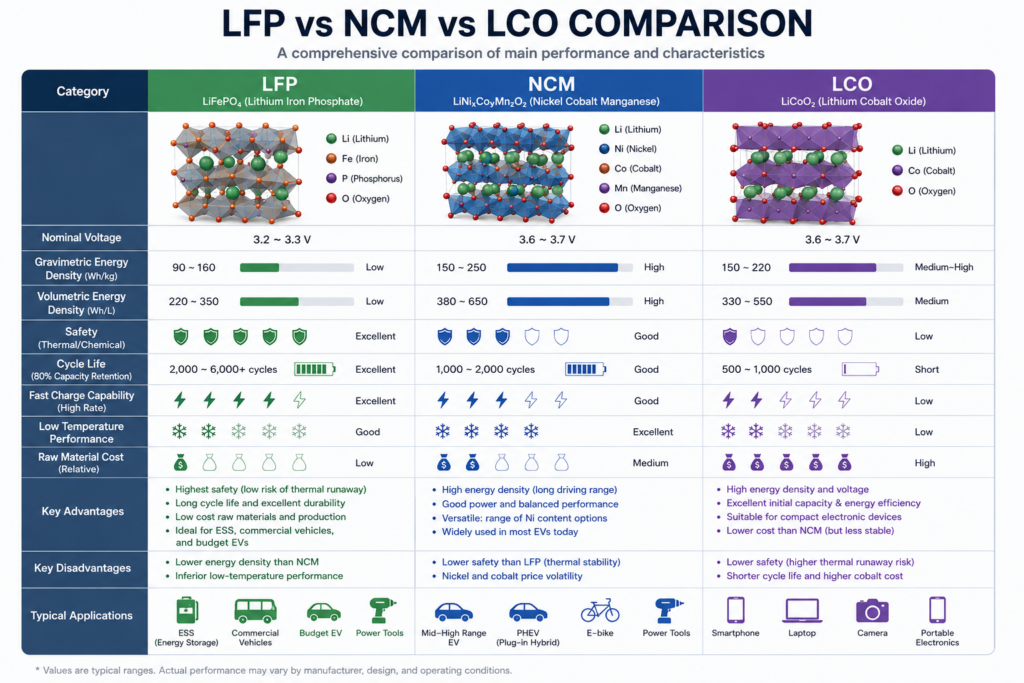
LFPNCMLCO Core elements Lithium + Iron + Phosphate Nickel + Cobalt + Manganese Lithium + Cobalt Energy density Low High High (volumetric) Safety Very high Moderate (varies with nickel %) Moderate Lifespan Very long (3,000+ cycles) Moderate Good Cost Low Moderate High Common use Budget EVs, ESS, electric buses Premium/long-range EVs Smartphones, small electronics
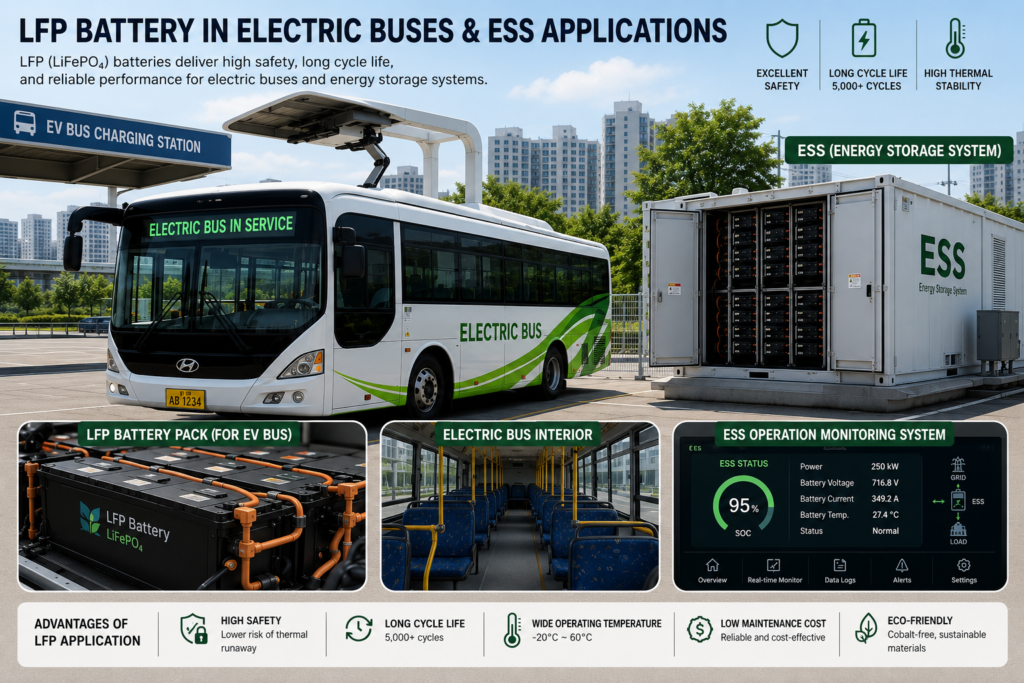
This is exactly why Tesla’s Standard Range models and most Chinese battery makers have leaned hard into LFP. A shorter range is an easy trade-off for buyers who care more about safety, longevity, and price. And for applications that charge and discharge constantly — electric buses, grid-scale energy storage — LFP’s long cycle life makes it the clear winner.
The Takeaway
LFP is what you get when you build a battery around iron instead of cobalt: less energy-dense, but safer, longer-lasting, and far cheaper. Don’t read “budget” as “worse” — read it as “optimized for a different job.”
Next time you see “LFP” on an EV spec sheet, you’ll know exactly what it means: this car prioritizes safety and durability over maximum range.
Curious whether your dream EV runs on LFP or NCM? Drop the model in the comments and I’ll help you find out. Up next: solid-state batteries — the technology aiming to beat both chemistries at their own game.